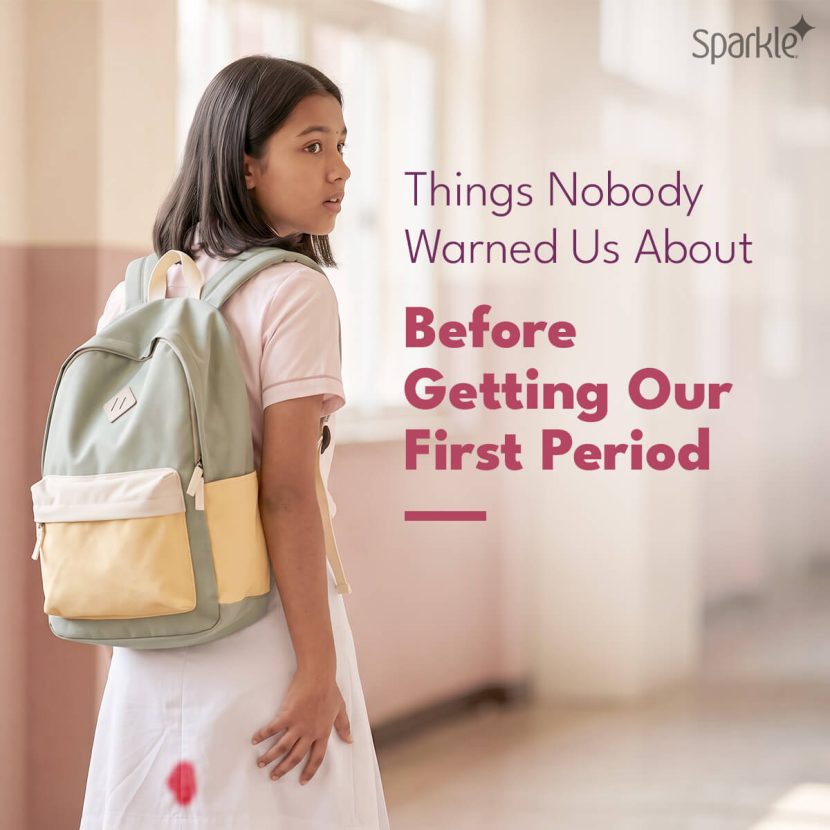
Nobody told us our first period might happen in the middle of class – with no pad, no plan, and absolutely no idea what to do next.
And that’s genuinely what happened to most of us. Not a calm, prepared conversation with a parent. Just a school bathroom, a wave of panic, a jacket tied around your waist, and a friend who probably didn’t know what to do either. If your first period was confusing or mortifying or just deeply inconvenient – that wasn’t your fault. It was a gap in information. A big one.
So let’s actually talk about it. Starting with science.
Your First Period Has a Name and a Timeline
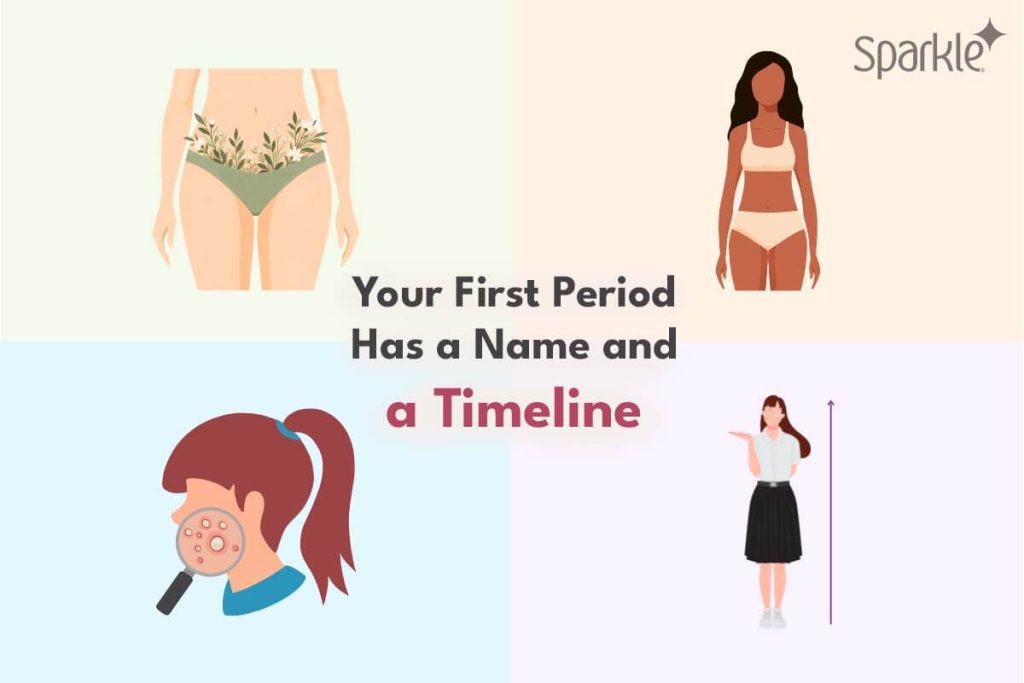
The medical term for a first period is menarche. And it doesn’t happen out of nowhere – it’s the result of years of gradual changes your body has already been making. Research by James Tanner, a paediatrician who studied puberty extensively, found that puberty follows a predictable sequence: breast development first, then a growth spurt, and then – usually one to three years later – your first period. It arrives when your body has built up enough fat stores and hormonal signals to support a menstrual cycle.
Which is also why your first few periods might not look like what you expected. Cycles are often irregular. Flow can be surprisingly light or unexpectedly heavy. That’s not a malfunction – your body is essentially learning a new system. It can take up to two years for cycles to settle into a regular pattern, and that entire time is considered completely normal.
Nobody Talks About the Emotional Part
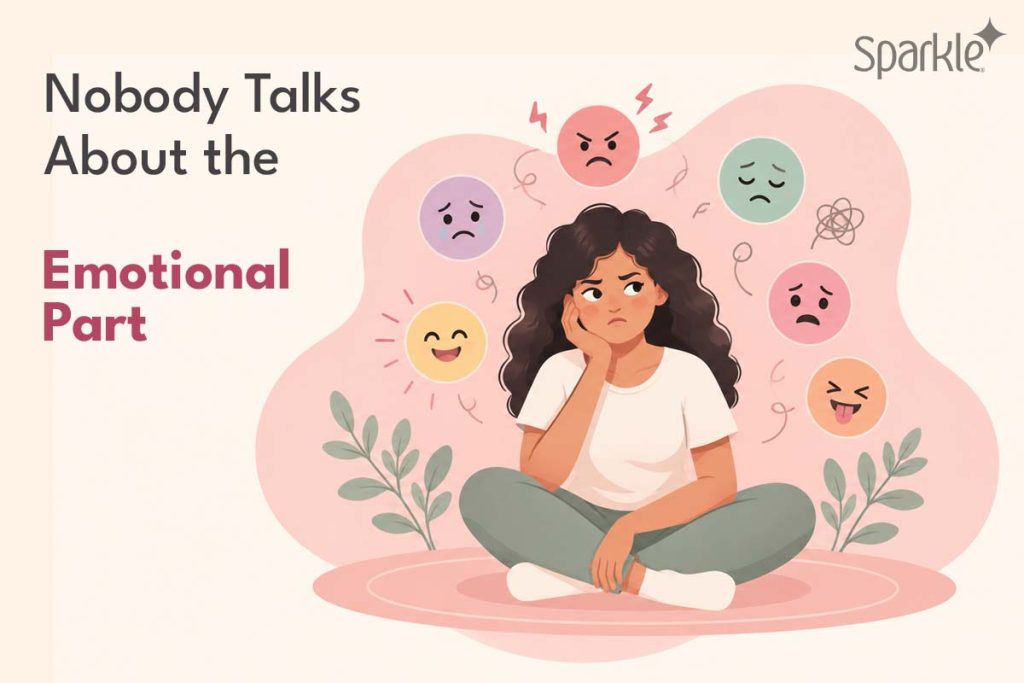
Most period conversations focus on the practical stuff – pads, cramps, what to keep in your bag. The emotional side tends to get skipped entirely. But research actually shows that how you experience your first period can shape how you feel about your body and your cycle for years afterward.
That’s not an exaggeration. It’s a documented thing. Which is exactly why not talking about it does more harm than people realise.
Things Worth Knowing Before It Happens
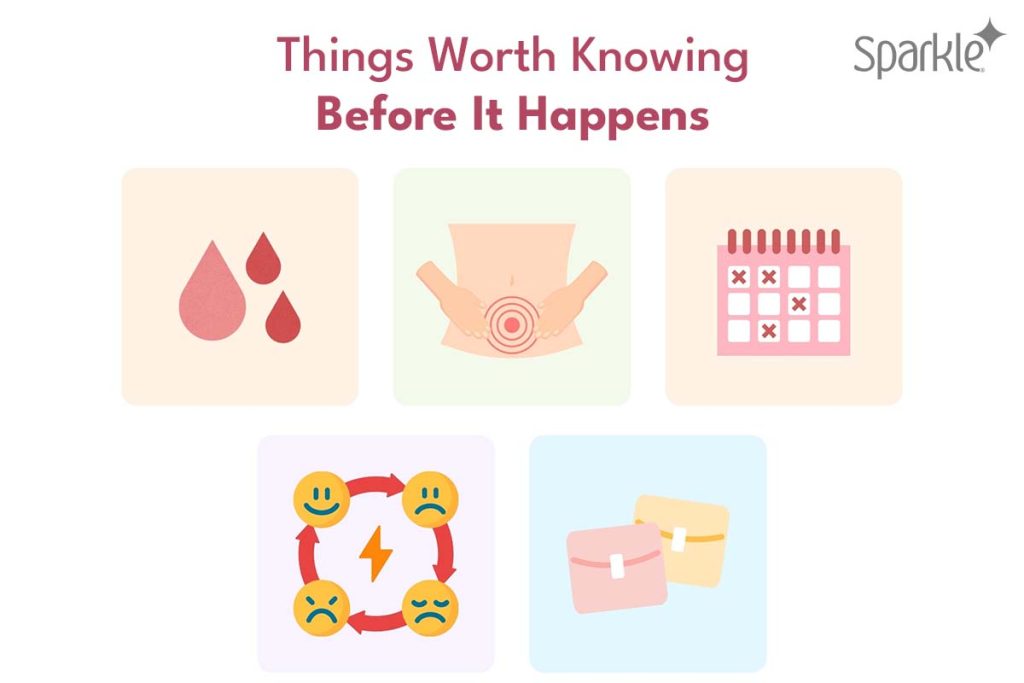
It might not start with red blood. Dark brown spotting is often the first sign – that’s older blood, and it’s completely normal. Don’t panic when it doesn’t look like what you’ve seen in the diagrams.
Cramps can start before the bleeding does. That pre-period ache is caused by prostaglandins, hormones that signal your uterus to contract. Annoying but normal.
An irregular cycle isn’t a broken cycle. In the first couple of years, anywhere from 21 to 45 days between periods is considered within range.
You don’t have to feel anything in particular. Some people cry. Some feel relieved. Some feel nothing at all and just want a snack. All of it is a valid response.
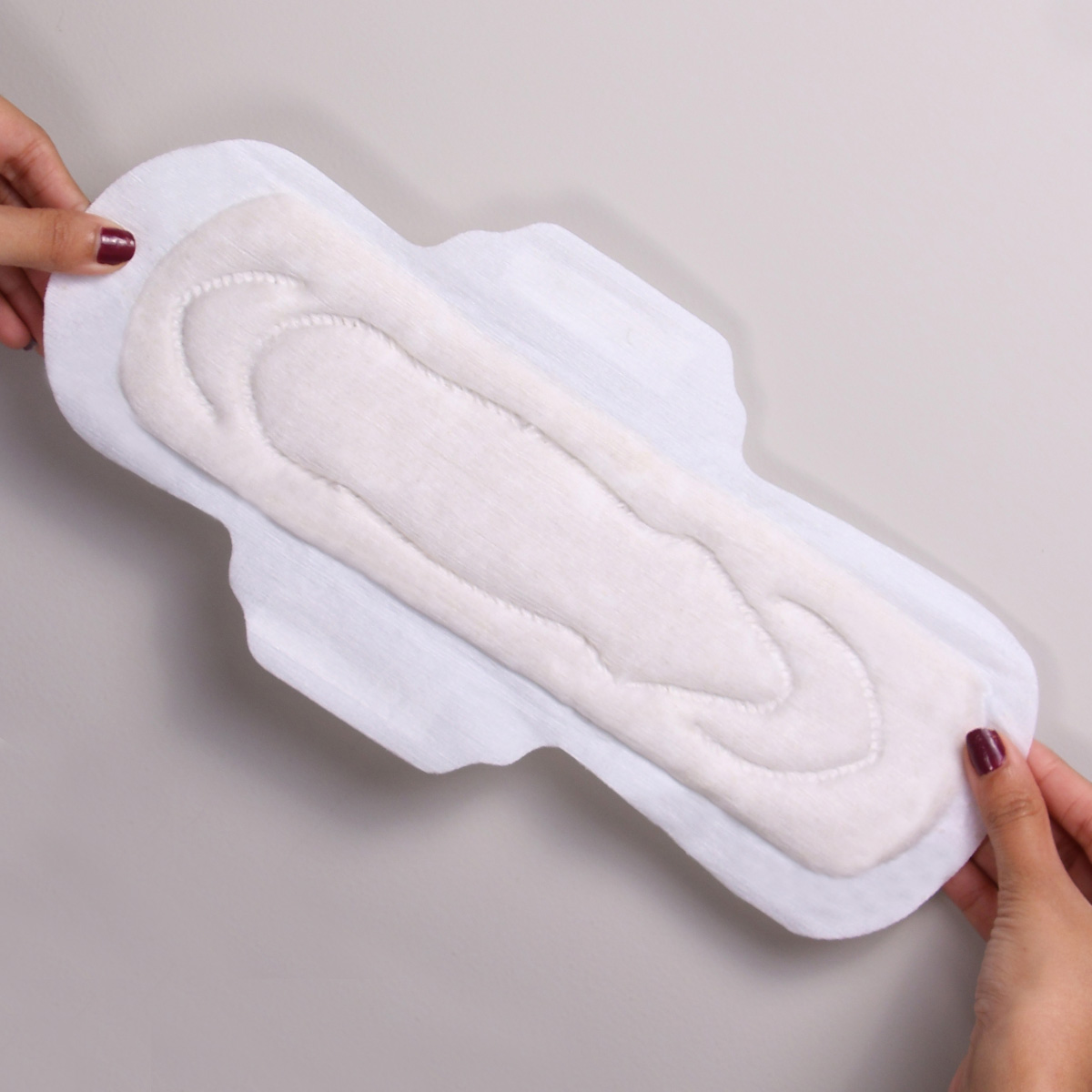
Carrying a pad or liner with you isn’t paranoid. It’s just practical – like keeping a phone charger in your bag.
Why Talking About It Actually Matters
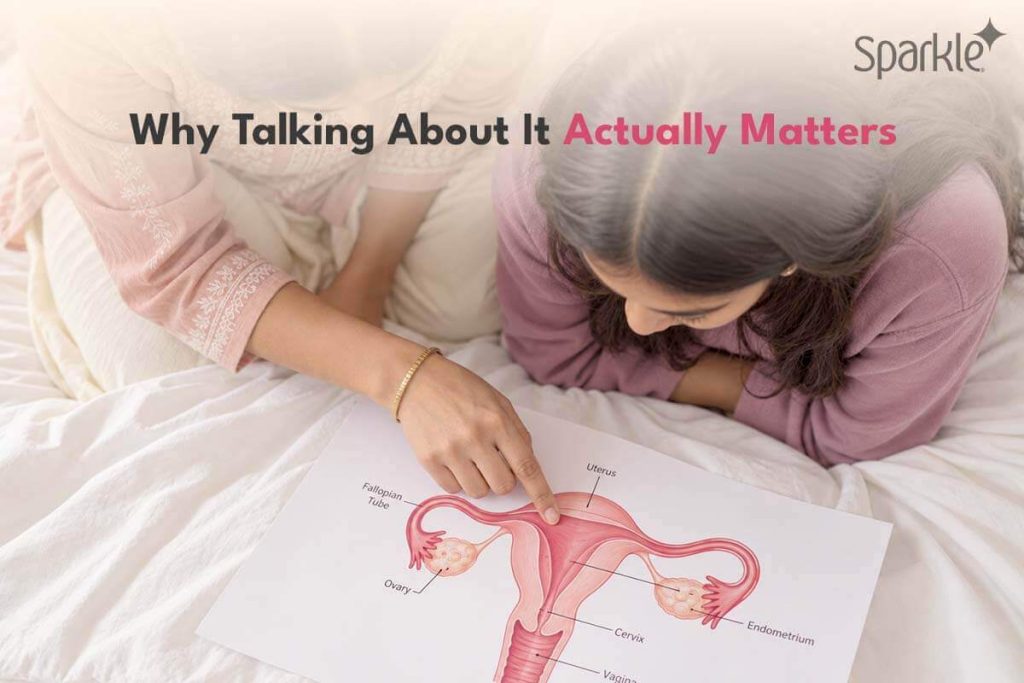
Most of the awkward first period stories exist because nobody said anything beforehand. And the fix for that is genuinely pretty simple: talk about it. Not because it needs to be a big moment, but because hearing “that happened to me too” is one of the fastest ways to make someone feel less alone.
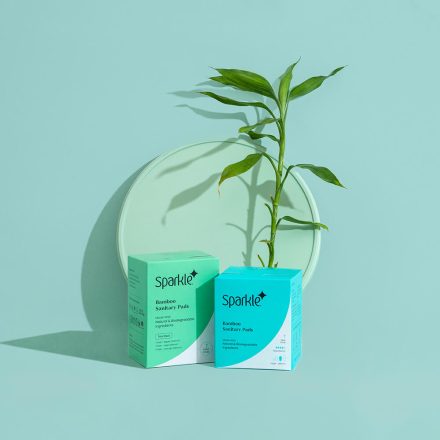
Share your story if you’re comfortable. Let younger people in your life know what to expect. Normalising the conversation is how the next generation gets to have a less stressful version of the experience most of us muddled through. And while you’re at it – keep something in your bag. Sparkle makes plant-based pads designed for sensitive skin, with no fragrance, no dyes, and no unnecessary ingredients. Because the least your first period deserves is a pad that’s actually on your side.
This article is for educational purposes only. If you’re experiencing significant pain, very heavy bleeding, or cycles that remain irregular well beyond the first two years, please speak to a doctor or a trusted healthcare provider.