At some point, an entire generation of us collectively decided not to wash our hair during our periods. And none of us questioned it.
There are countless rules that come with having a period – most of which were never scientifically proven to begin with. Whether passed down from mothers and grandmothers, picked up from friends, or absorbed from those deeply uncomfortable middle school health classes, almost none of these guidelines have any basis in science. Here are seven of the most common period myths, and the truth behind each of them.
1. “You Can’t Wash Your Hair During Your Period”
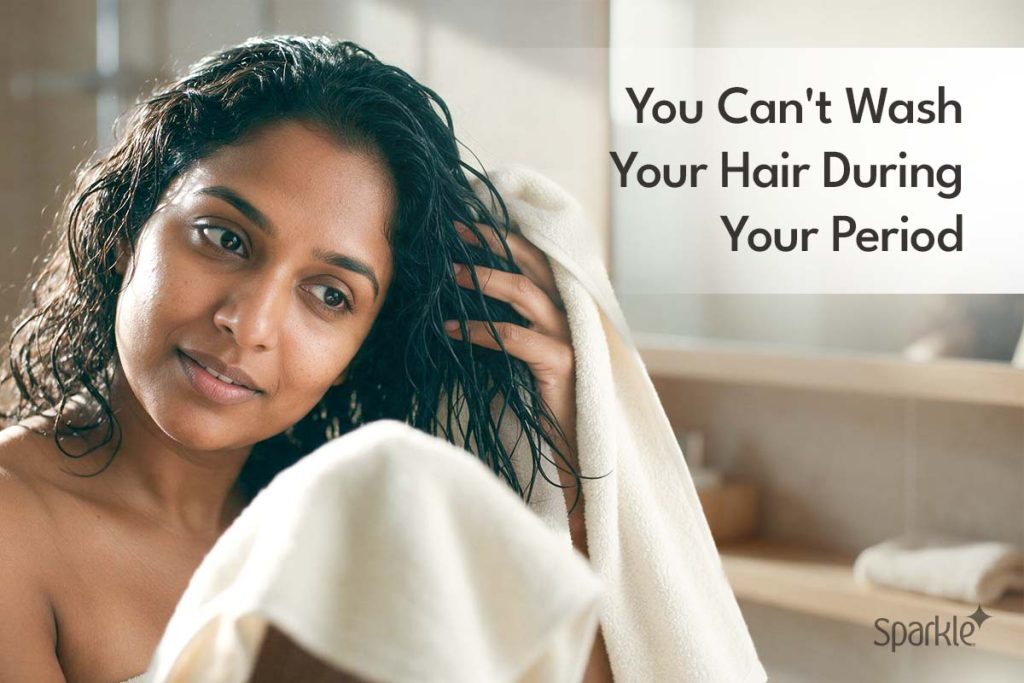
As deeply as some of us believe this one, it couldn’t be further from the truth. There is no scientific basis for this rule – it stems from old cultural beliefs, nothing more. Washing your hair has absolutely no impact on your menstrual cycle. Neither does the temperature of the water.
2. “You Can’t Get Pregnant During Your Period”
This one is close – but dangerously misleading, given how many unplanned pregnancies happen every year. While it is less likely to conceive during your period, it is not impossible. For people with shorter cycles in particular, having sex during a period can lead to earlier ovulation, which means conception is genuinely on the table.
3. “You Shouldn’t Exercise During Your Period”
Actually, research suggests the opposite. Exercise increases blood flow and triggers the release of endorphins – the body’s natural painkillers – which can actively help with menstrual cramps. Movement is one of the more legitimate remedies for period pain, not something to avoid.
4. “Period Blood Is Dirty”
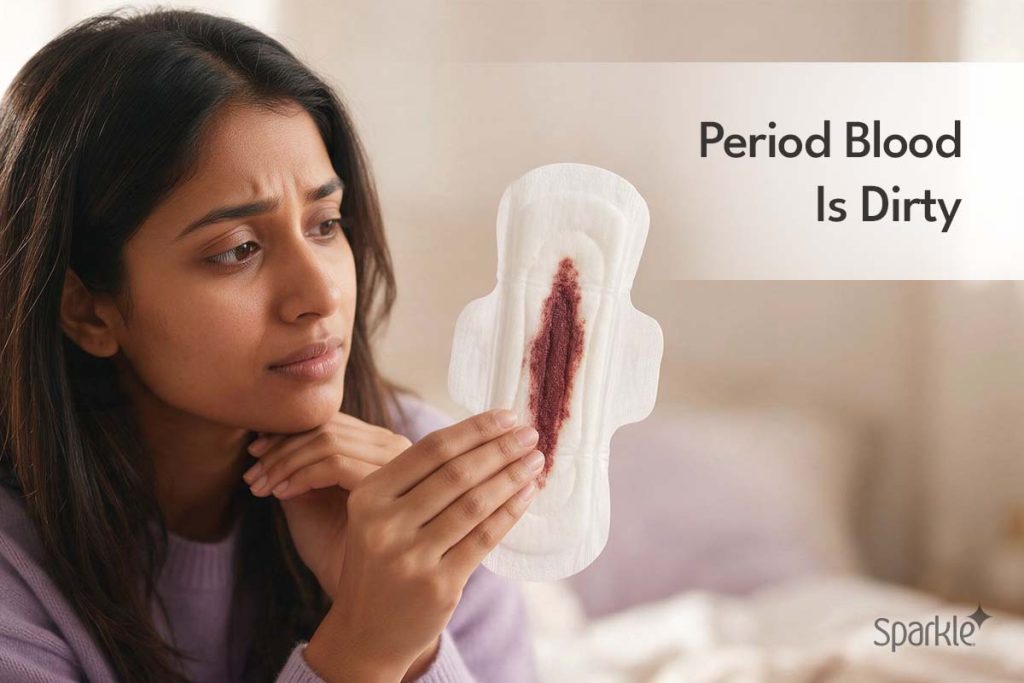
Period blood is made up of shed uterine lining and vaginal fluids. That’s it. This myth stems from long-standing cultural beliefs that menstruation is shameful or taboo – not from anything scientific. There is nothing inherently dirty or harmful about period blood.
5. “Your Period Is Supposed to Be Every 28 Days”
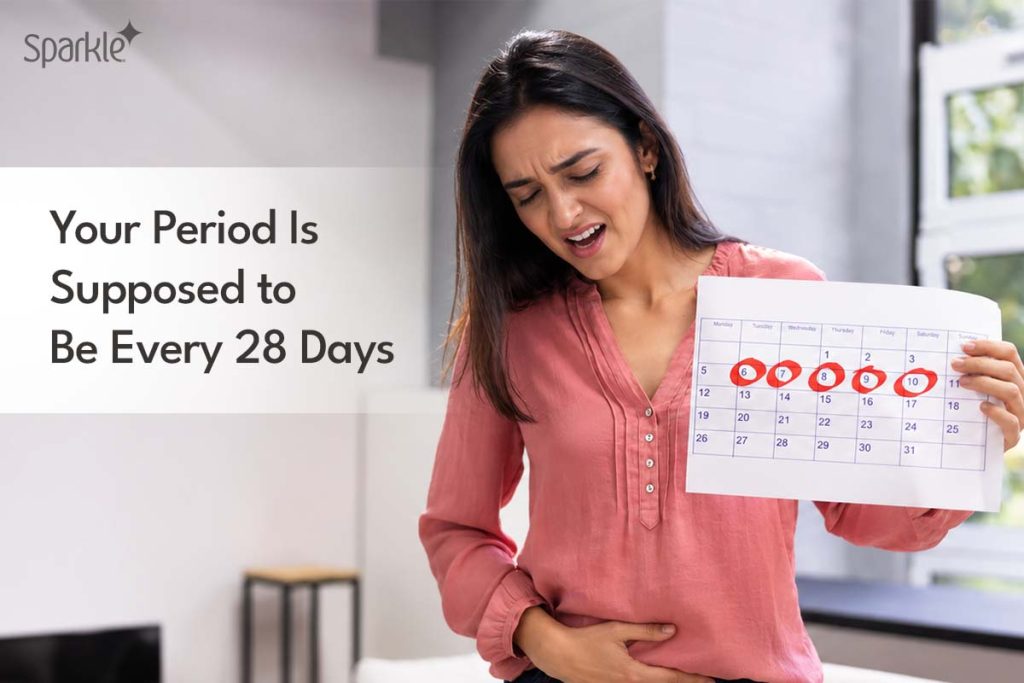
A cycle of exactly 28 days is the average – not the rule. Anywhere between 21 and 35 days is completely normal, and cycle length can vary significantly from person to person, and even from cycle to cycle for the same person. If yours doesn’t land at exactly 28 days, that’s not a problem.
6. “PMS Doesn’t Exist”
PMS is not only real – it’s scientifically documented. The premenstrual phase is directly caused by drops in oestrogen and progesterone that occur throughout the menstrual cycle. It has a clear hormonal basis, and dismissing it as a personality quirk or an overreaction has never been anything other than wrong.
7. “You Shouldn’t Eat Cold Food or Drink Cold Beverages During Your Period”
Tested. Disproven. Multiple times. Cold food and drinks have no proven impact on menstruation. For cramps specifically, the things that actually help are heat, light exercise, and eating well – not avoiding a cold glass of water.
Why Most of These Beliefs Stuck Around
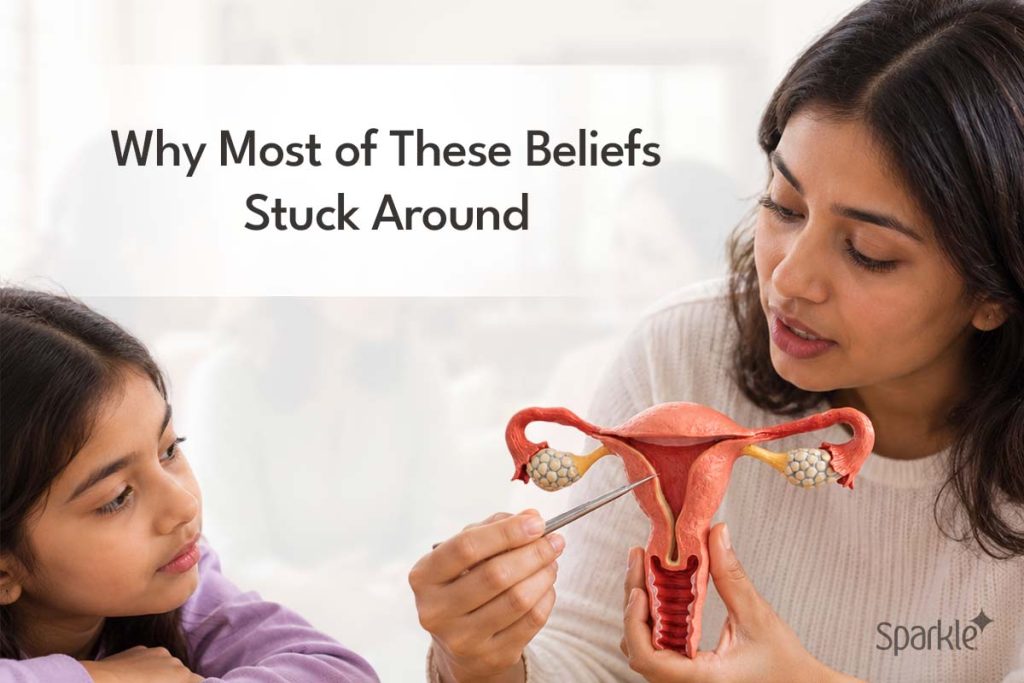
The reason so many period myths have survived across generations is simple: menstruation was a taboo topic that wasn’t openly discussed. In the absence of real information, the most widely repeated idea became the accepted one, regardless of whether it had any evidence behind it.
The more informed we are about our own bodies, the less likely we are to follow rules that were never grounded in reality – and the less likely we are to pass those same myths on to the next generation. Better information also means better products. Sparkle’s plant-based period care exists because of actual research into what the body needs – not because of old wives’ tales about what to avoid.
This article is for educational purposes only and is not a substitute for medical advice. If you have concerns about your menstrual cycle, please consult a healthcare professional.