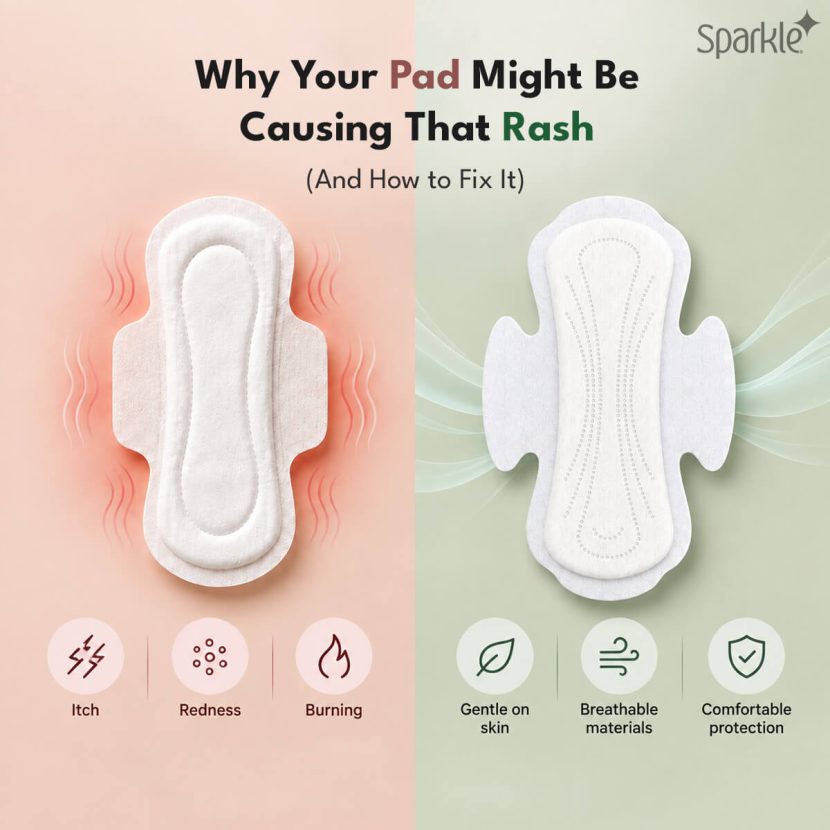
That itch, redness, or burning you keep blaming on a bad period might actually be your pad’s fault.
You’ve tried different underwear. You’ve switched soaps. You’ve gone down a rabbit hole of home remedies for that raw, irritated feeling during your period – and still, every month, it comes back. Here’s what nobody tells you: the rash probably isn’t your skin being too sensitive. It’s your pad doing something your skin doesn’t agree with.
Let’s actually understand what’s going on.
The Real Cause: Contact Dermatitis, Not “Your Skin”
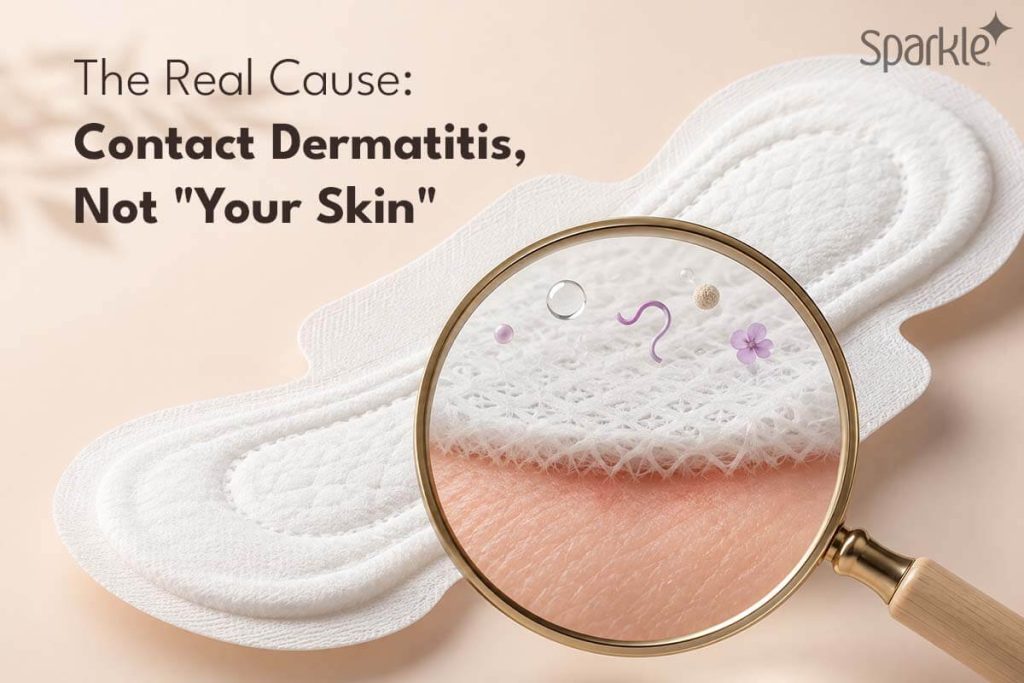
What most people chalk up to “sensitive skin” during their period is often contact dermatitis – a skin reaction that happens when your skin touches something it doesn’t like. It shows up in two ways: direct irritation from a material, or an allergic-type reaction to a specific ingredient.
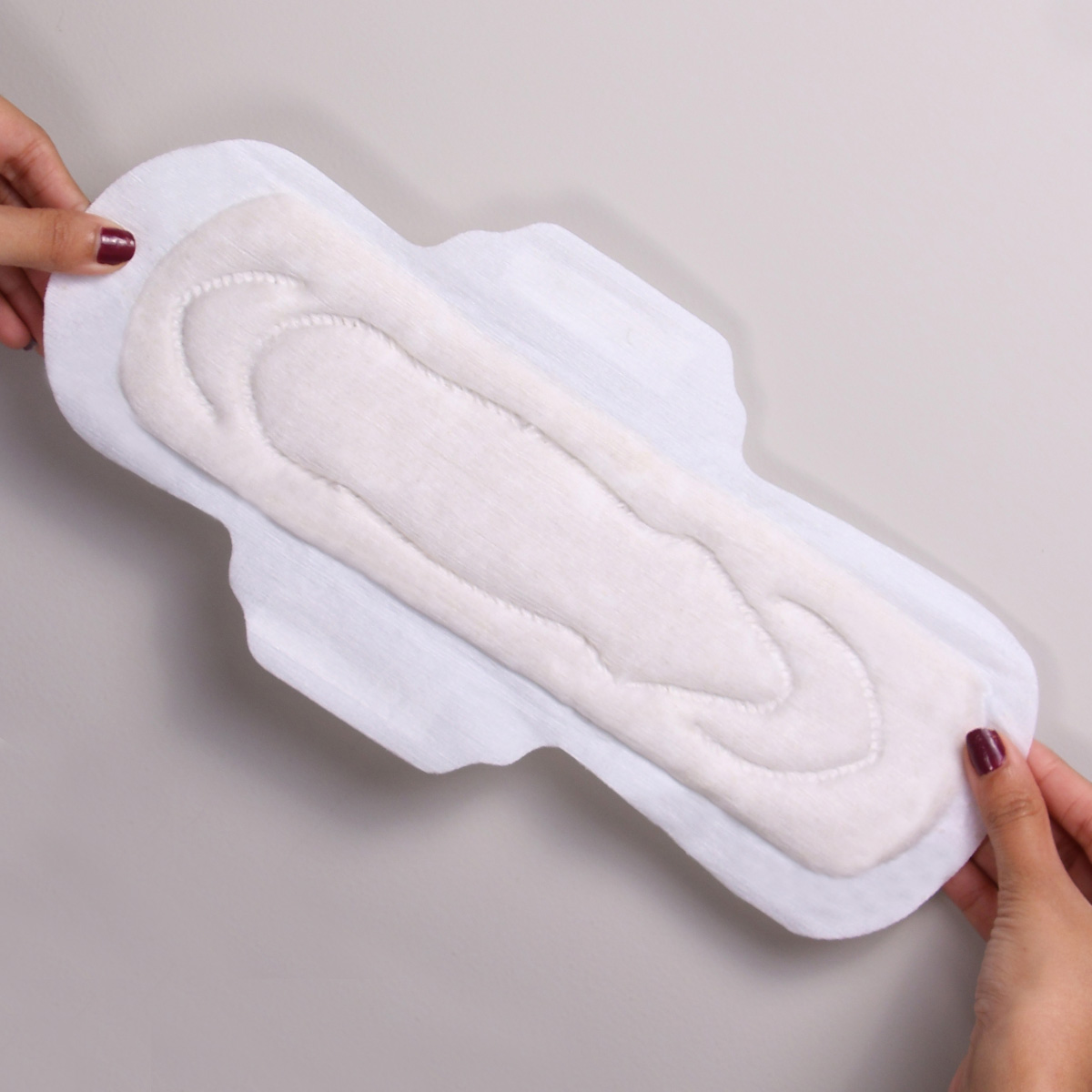
Conventional pads can trigger both. They typically contain synthetic fibres, adhesives, fragrances, and materials processed with chlorine bleach – a combination that’s a lot to ask your skin to tolerate for several days in a row, especially when it’s already in a reactive state.
So no, the rash isn’t random. It’s your skin reacting to something specific.
Why Period Skin Is More Reactive to Begin With
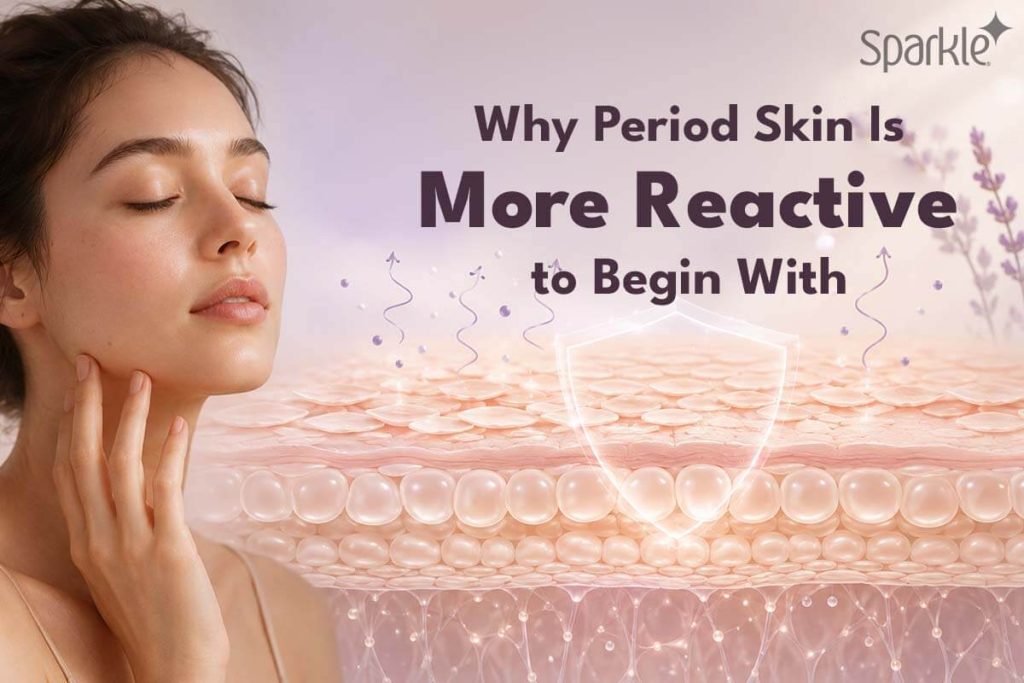
There’s a hormonal reason your skin is more sensitive during your period. In the days leading up to and during menstruation, skin barrier function can weaken slightly, making it more reactive to things it might tolerate just fine the rest of the month.
Translation: your skin isn’t being dramatic. It’s just having a genuinely harder time right now, and it needs materials it can actually work with.
The Friction and Moisture Problem
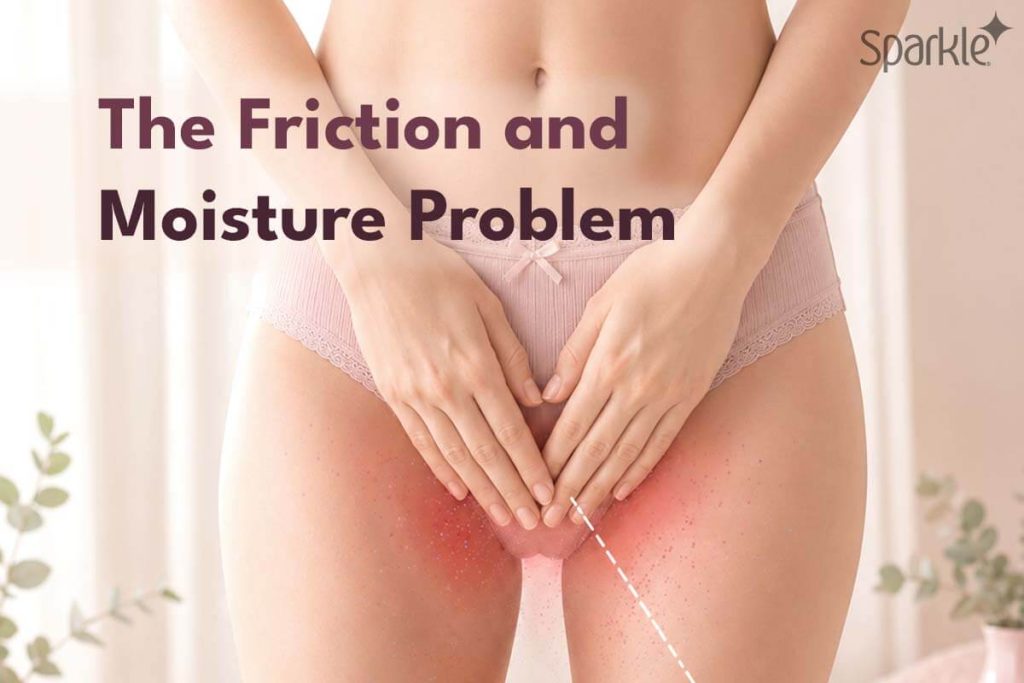
There’s something else happening too. When skin stays damp and rubs against a surface repeatedly, it gets irritated – same reason new shoes give you blisters. Now add a pad that traps heat and moisture against skin for hours, doesn’t breathe, and you’ve got the conditions for redness, chafing, and swelling.
This is why a pad can feel fine at 9am and unbearable by 3pm. Your skin hasn’t changed – it’s just been accumulating irritation the whole time.
Why Plant-Based Actually Means Something Here
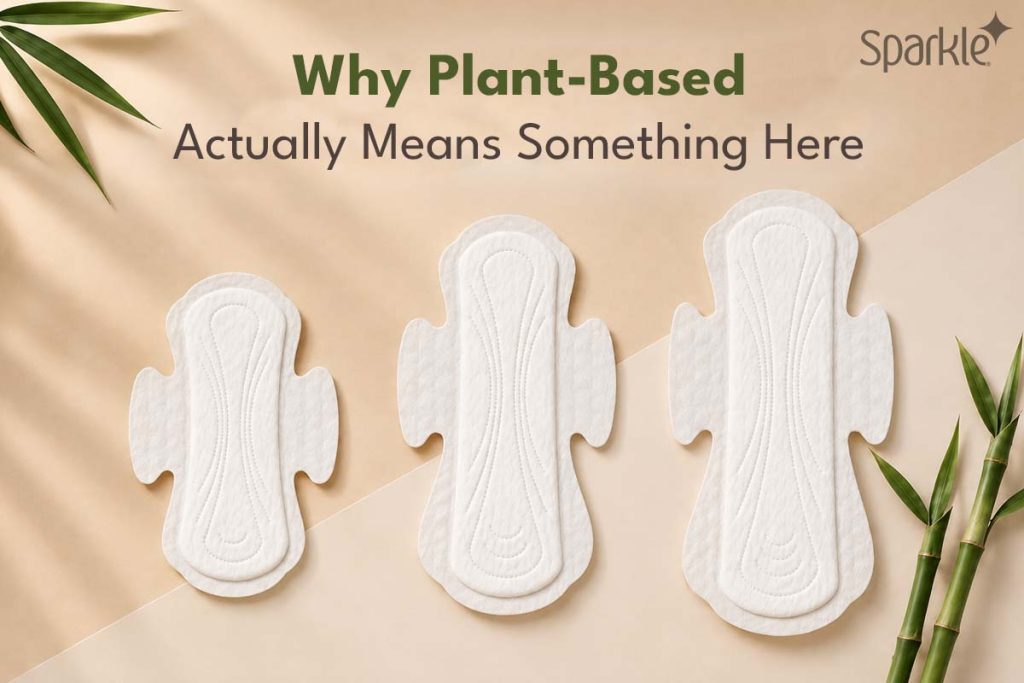
“Plant-based” isn’t just a buzzword. It means using materials derived from plants – like cotton, bamboo or cellulose – instead of petroleum-based synthetics. And that distinction matters against your skin.
Plant-derived materials tend to be more breathable, which means less heat and moisture build-up. They’re also typically free from the fragrances and dyes that are common irritants in conventional pads. Less stuff touching your skin means less for your skin to react to. It’s not complicated – it’s just logic.
What Actually Helps
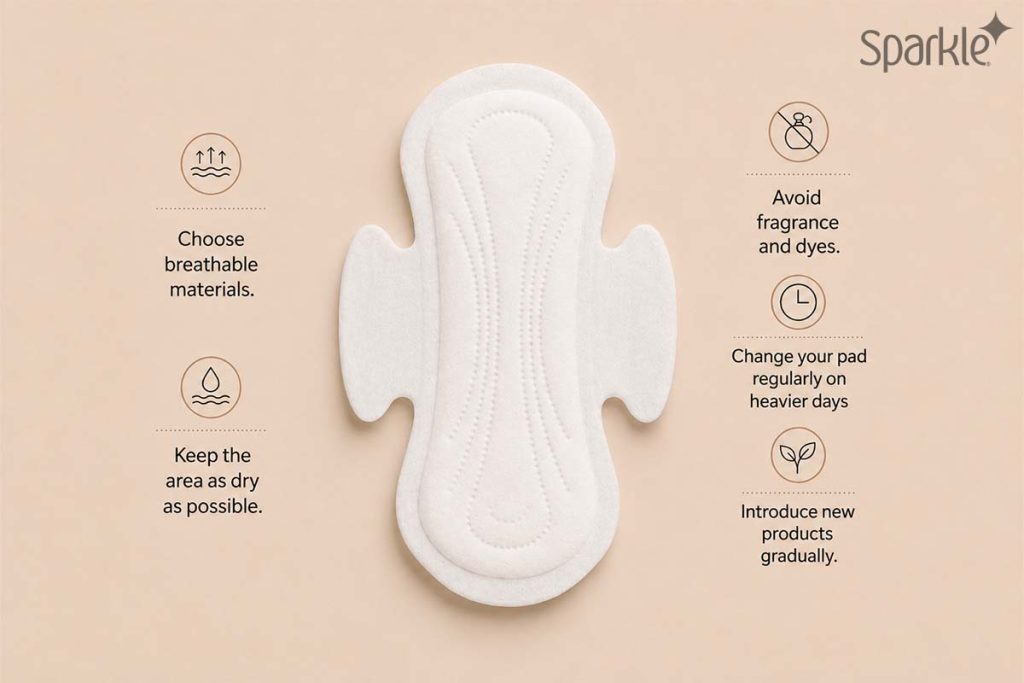
Choose breathable materials. Cotton, cellulose or bamboo allow airflow and don’t trap heat and moisture the way synthetic layers do.
Avoid fragrance and dyes. These are among the most common contact irritants in period products and add nothing useful for your skin.
Change your pad regularly on heavier days. Prolonged moisture contact is one of the main drivers of irritation, regardless of what the pad is made of.
Introduce new products gradually. Give your skin a cycle or two to respond before committing to anything new.
Keep the area as dry as possible. Simple but genuinely effective.
It’s Not About Toughing It Out
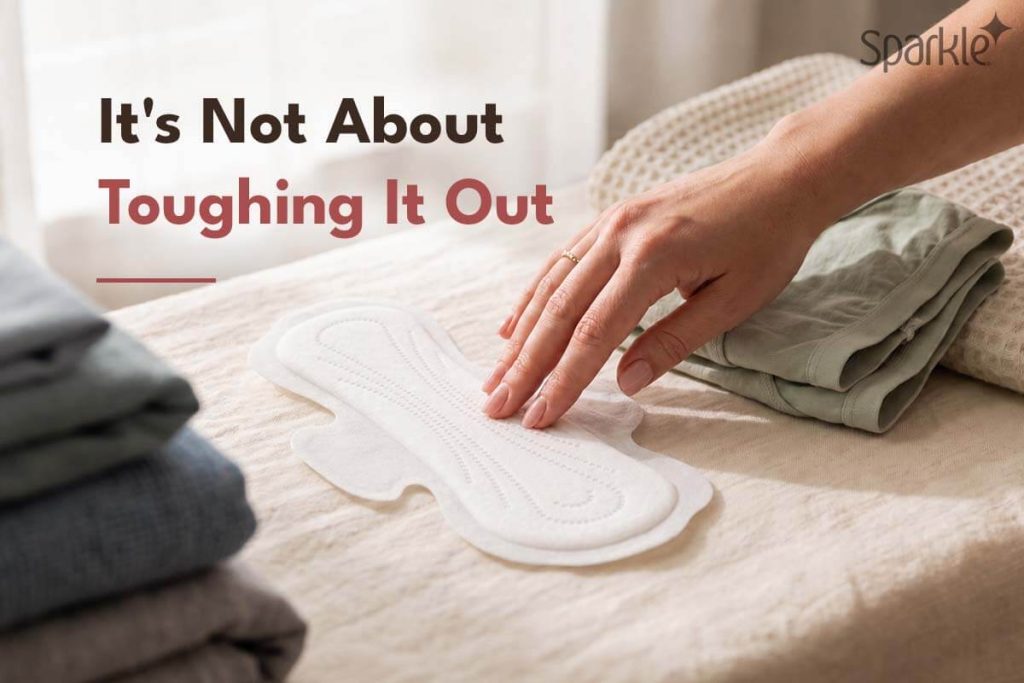
A lot of people assume period discomfort is just part of the deal. It’s not. A rash is your skin communicating clearly – something is irritating it, and it would very much like you to stop. Listening to that and choosing products accordingly isn’t being precious about it. It’s just basic skin care applied to a product you use every month for potentially decades.
A calmer period routine often starts with simpler materials: fewer synthetic layers, no unnecessary additives, and products designed to work with your skin rather than against it.
This article is for educational purposes and is not a substitute for medical advice. If your rash is severe, persistent, or accompanied by swelling or significant pain, please consult a dermatologist or healthcare provider.