Most of what you were taught about “down there” is either wrong, outdated, or designed to sell you something you don’t need.
Scented washes. Douches. Tight synthetic liners marketed as “freshness.” A culture that treats a completely normal part of the female body like a problem that needs fixing, covering up, or apologising for.
Here’s the uncomfortable truth: a lot of the products and “hygiene” habits marketed to us since our teenage years actually disrupt health rather than protect it. If you’ve ever dealt with recurring irritation, infections, or just a nagging feeling that something’s off – it might not be bad luck. It might be a lack of information.
Let’s fix that. With science.
The Body Already Has a Self-Cleaning System. (And It’s Brilliant.)
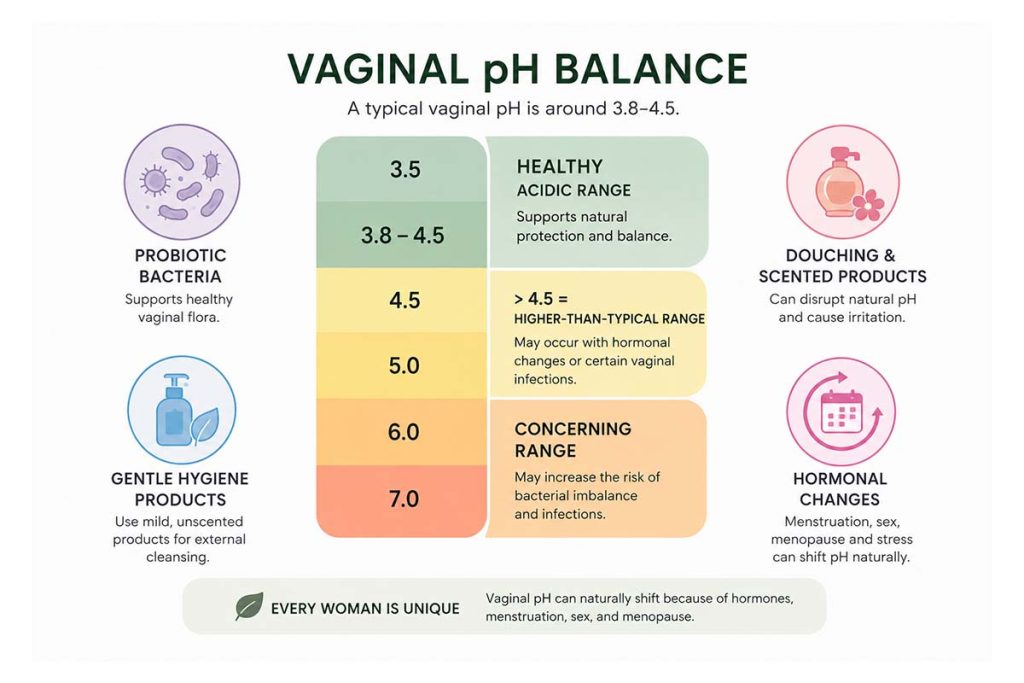
Here’s something worth knowing: the vaginal microbiome. First studied in depth by German gynaecologist Albert Döderlein in the 1800s, it turns out a healthy vagina is dominated by Lactobacilli – bacteria that produce lactic acid and hydrogen peroxide, keeping the internal environment at a naturally acidic pH of around 3.8 to 4.5.
This acidity isn’t an accident. It’s a defence mechanism. It suppresses the growth of bacteria and yeast that thrive in more neutral or alkaline environments. In other words, your body has been running its own quality control system this whole time. No fragrance required.
The problem is that scented soaps, douches, and harsh cleansers strip this ecosystem – pushing pH levels up and killing off the protective bacteria along with the harmful ones. Research has consistently linked internal washing (douching) to higher rates of bacterial vaginosis and other infections, precisely because it disrupts this delicate balance.
The takeaway: less intervention is often more protection. Water and a mild, pH-balanced external cleanser is genuinely all that’s needed.
Why Material Science Matters More Than Marketing
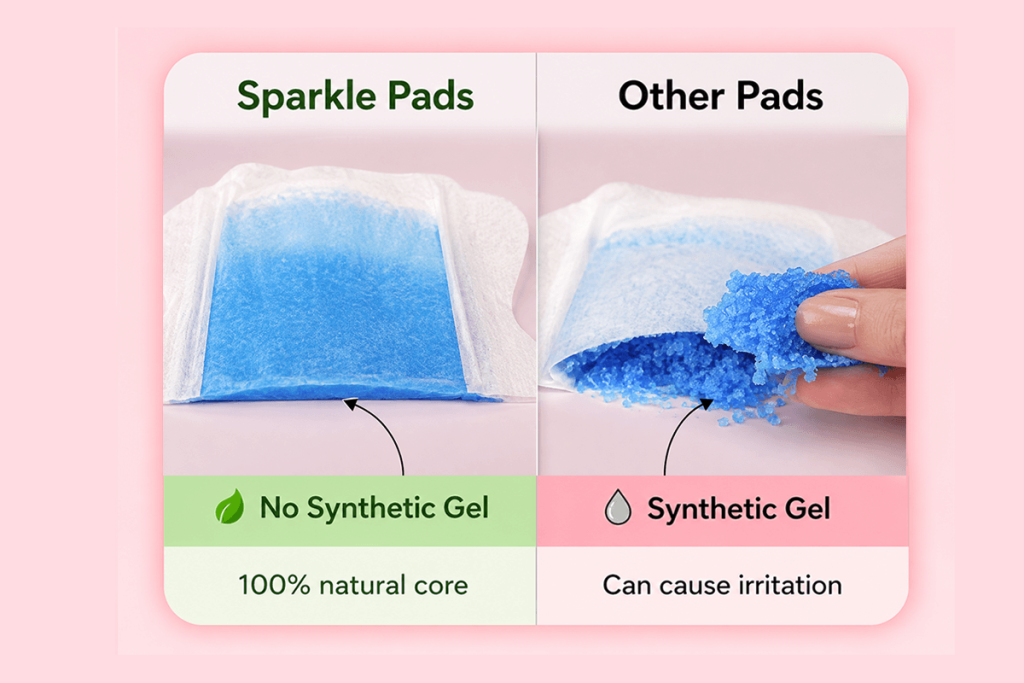
There’s a reason fibres like cotton, cellulose and bamboo keep showing up in intimate care conversations – and it’s not just a wellness trend.
Synthetic materials commonly used in mainstream pads and liners are largely non-breathable. They trap heat and moisture against the skin, creating a damp microenvironment – exactly the conditions yeast and bacteria need to multiply. This is sometimes referred to in dermatology as the occlusion effect: sealing the skin reduces airflow, increases surface moisture, and over time, can lead to irritation, chafing, and higher infection risk.
Breathable natural materials work with the body, not against it – allowing airflow while still managing moisture, which keeps the surrounding skin drier and less reactive. This is also why more people are shifting toward gentler period care. Not because it’s trendy. Because it’s biologically logical.
Your Cycle Isn’t Just About Bleeding. It’s a Hormonal Weather System.
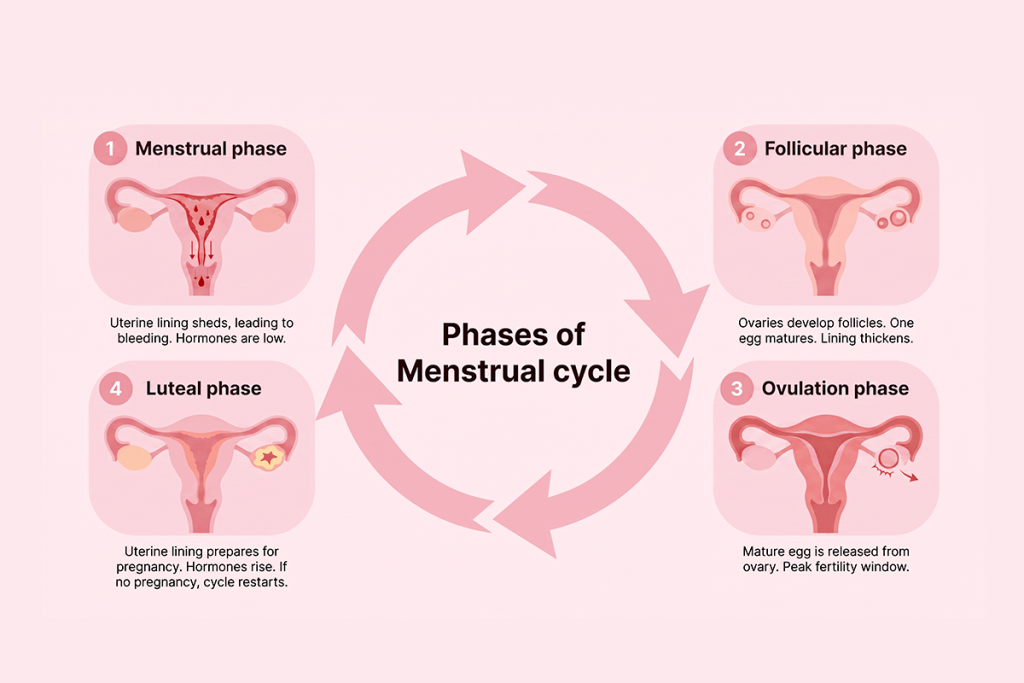
A concept that deserves way more airtime: your menstrual cycle isn’t a single event. It’s four distinct phases, each governed by different hormones – oestrogen and progesterone rising and falling in a predictable rhythm.
Follicular phase: oestrogen rises, energy tends to climb. You might actually feel like a person.
Ovulation: a hormonal peak, often linked to increased energy and libido.
Luteal phase: progesterone dominates, which can bring fatigue, mood shifts, and heightened sensitivity. This is the biological basis of PMS – not “just being emotional.”
Menstrual phase: hormone levels drop sharply, prompting the uterine lining to shed. You know this part.
Understanding this rhythm isn’t just interesting trivia – it’s practical. Knowing which phase you’re in can explain dips in energy, changes in skin, or shifts in mood. It turns “why do I feel like this?” into “oh, that actually tracks.”
Small Habits, Backed by Actual Logic
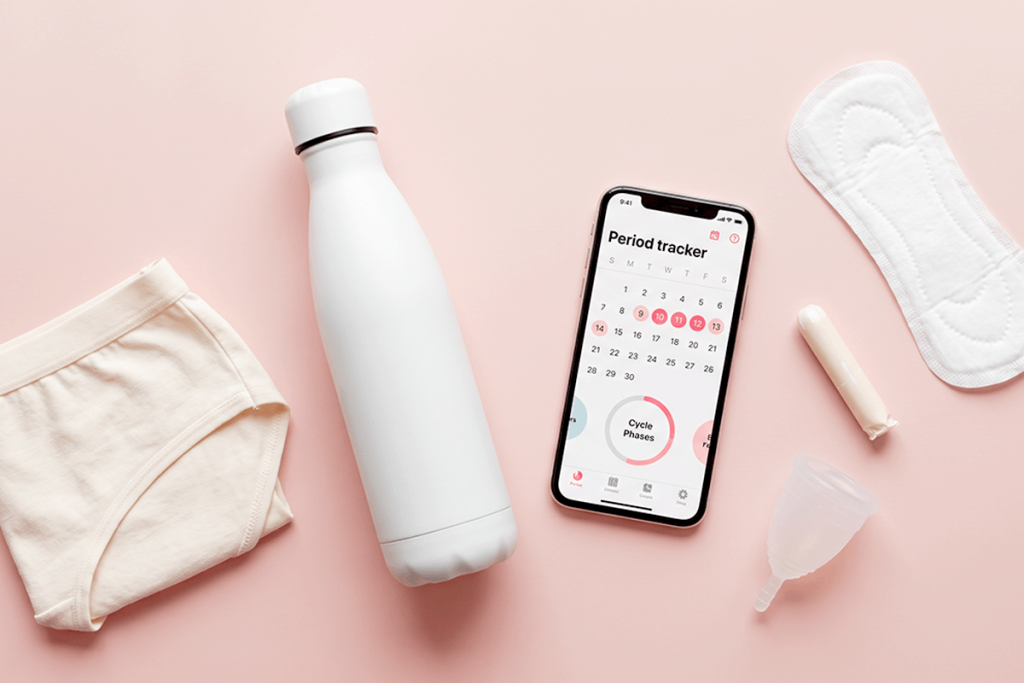
You don’t need a 10-step intimate care routine. You need a few habits that are actually rooted in how the body works.
Skip the scented everything. Fragrance is one of the most common irritants in intimate care products. It’s doing nothing useful.
Choose your materials. Natural, breathable fabrics reduce moisture build-up and irritation – especially during your period.
Change period products regularly. Prolonged moisture contact, regardless of how premium the product is, increases irritation risk.
Stay hydrated. Hydration supports mucous membranes throughout the body – intimate skin included. Boring advice. Still true.
Track your cycle. Not for perfection. For pattern recognition. Your body is communicating constantly. Most of us just haven’t learned to listen yet.
This Is What Your “Health Era” Actually Means

It’s not a trend, a hashtag, or a specific product. It’s understanding your own biology instead of outsourcing that understanding to marketing claims. It’s choosing comfort and material science over fragrance and hype. It’s realising your body already knows what it’s doing – your job is just to stop getting in the way.
Small rituals matter here: a journal to track how you feel through the month, water to stay ahead of hydration, a plant on the desk because calm environments support calm everything – and yes, thoughtful, breathable period care that respects your skin instead of working against it.
That’s not overthinking your health. That’s finally taking it seriously.
This article is for educational purposes and is not a substitute for medical advice. If you’re experiencing irritation, unusual discharge, or recurring infections, please consult a healthcare provider.